
Grooming Operations
What we do
Here at the RSC our goal is to provide our riders with a safe, smooth,and efficient trail network to get you up into the alpine or wherever you choose to ride. Our groomer operators battle through harsh conditions, low visibility, and long nights to provide you with these trails. Most of this work happens behind the scenes, after our riders have packed it in for the day and the trails are vacant. Due to this it is often not known what all goes into providing a smooth trail so lets take a look at our grooming operations.
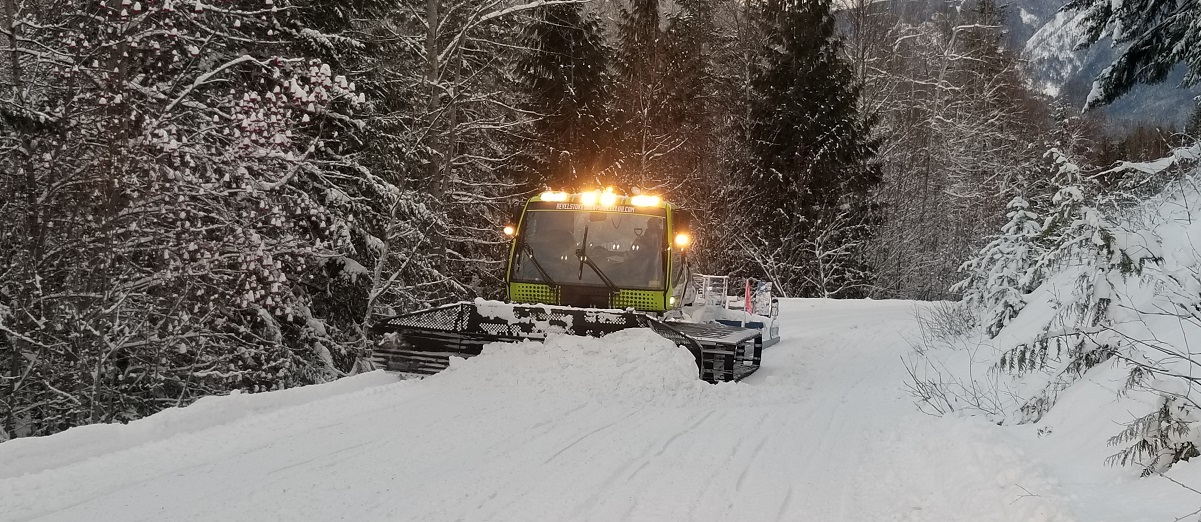
Groomer with blade and drag
Our Equipment
To understand what makes a trail smooth you first have to understand the equipment. The RSC has a variety of different implements to use on our snowcats to give you the best trails.
Starting with our Snowcats themselves we have 2 Prinoth Bisons and 1 BR-350. A snowcat is just a snow processing machine, with the front blade cutting into the snow. We are able to use the blade to move snow where we need it and it breaks up the larger imperfections (whoops) on our trails. After the blade comes the tracks; the tracks break up the snow as the machine rolls over it and packs it down removing most of the air from the snowpack. After the tracks run over the snow, the rear implement processes it.
Early season this rear implement is a simple compactor bar that does just that, compacts the snow. Once we have a good base to work with we switch our Bisons over to a tiller and hook the Mogul Master onto our BR-350. The tiller has a spinning auger that beats the last bit of air out of the snow and introduces a bit of heat so that when the snow sets up it’s much firmer. These tillers leave what’s known as ‘corduroy’ behind and leave the trail looking perfect. The Mogul Master is a set of cutting blades and a compactor pan that is dragged behind our BR-350. These blades cut the top of the whoops off and deposit the snow into the valleys between. The compactor pan the slides over this surface leaving it with a perfectly smooth finish.
Weather & Conditions
The largest factor in grooming is the weather.Operators are constantly assessing the snow and weather and adjusting grooming practices to help create the smoothest and strongest trail possible.
Warm temperatures (>0°C): Warm temperatures create what is commonly referred to as “Elephant Snot”or “Mashed Potatoes”. This is the result of the moisture in the snow not freezing and ultimately makes the snow very sticky. This sticky snow gets caught on the blade, doesn’t compact even, clogs Mogul Masters and tillers, and gives our operators nightmares. To add fuel to the fire, whoops often form quicker and larger in these conditions.
Colder Temperatures (<-25°C): These frigid temperatures, although uncommon, do have to be accounted for. Typically, for temperatures colder than -25, we will suspend our grooming operations. There are a couple reasons for this. The first being that our trails really don’t see a lot of traffic during these cold snaps. The limited traffic along with how hard the trail freezes means that they typically stay in pretty good shape. The second reason is for our operator’s safety. The cold temperatures aren’t easy on our machines and can lead to breakdowns more often, risking our operators needing to be rescued from the mountain in the cold.
Ideal Temperatures (-5°C – -20°C): Temperatures in the range create ideal grooming conditions and are often when you will notice our trails at their best. We are able to use all our equipment to the best of its ability and it’s much easier to work with the snow. These conditions are typically when our trail network sees the most use but we are typically able to give most of our trails a good reset overnight.
Early Season Grooming
Late in November, we ship our snowcats up the mountain to the snowline and wait to start putting in trails. Using a technique called “Track Packing” we run our machines without a rear implement to make them more maneuverable and less likely to damage equipment. This allows us to pack down our trail using the weight of the snowcat and start building a base sooner. Once we have the trail put in we throw a compactor bar behind the machine and start grooming for our riders. The early parts of the season are often spent filling in creeks and ditches to create a safe and flat trail.
Mid Season Grooming
Once we have a good base to the bottom of our trail network, we can commence our regular grooming operations. We operate 7 nights a week on both mountains and often will send two machines out on Boulder if it’s a busy weekend. We also day groom on Fridays and Saturdays to ensure you have a smooth ride down the mountain too.
Late Season Grooming
As the snowline starts to recede up the mountain and the valley shifts from winter to spring, grooming gets complicated. The warming snowpack gets very sticky, requiring more time and working of the snow to create a smooth finish. This, combined with warmer temperatures, breaks down the snowflakes into facets. Once this happens the snow doesn’t bond together, creating a very soft trail that doesn’t hold up to sleds for long. The best way to deal with this is to limit our grooming late in the season. The less we disturb the snowpack the longer it will last.
How You Can Improve the Trails
Ride Smooth: To keep a trail smooth we need smooth riders. Smooth acceleration and braking on our trails goes a long way. Whoops form from aggressive braking and acceleration where your track deposits a pile of snow in the middle of the trail. It doesn’t take long for this pile of snow to grow and once it starts, it’s not going to stop.
Limit cutting on and off the trails: We understand that most of you are here to ride the backcountry, not our trail system, so leaving the trail is inherent. When leaving the trail sleds often deposit large amounts of snow onto the trail or create a large rut in the trail. This leaves the trail uneven and will eventually create whoops in that area. When you are leaving the trail we ask that you do it as smoothly as you can. This will limit the amount of snow deposited on the trail and leave our trails smoother for longer.
Take the path less travelled: More often than not our riders are excited to get to the top of the mountain or just want to get back down to the truck sooner, we don’t blame you. This typically means taking the Bezanson and McKay Way which causes these trails to see a lot more abuse. We encourage you to take another option such as the Kirkup or Frisby Main. These trails see much less traffic throughout the day and stay in much better shape. The smoother trail means less wear and tear on you and your machine and depending on the day can sometimes mean you get down to the truck faster.
Thank a groomer!
Our work here at the RSC wouldn’t be possible without our dedicated grooming operators. They spend long nights dealing with harsh conditions alone in the backcountry. A thumbs up as you ride past our groomers goes a long way.